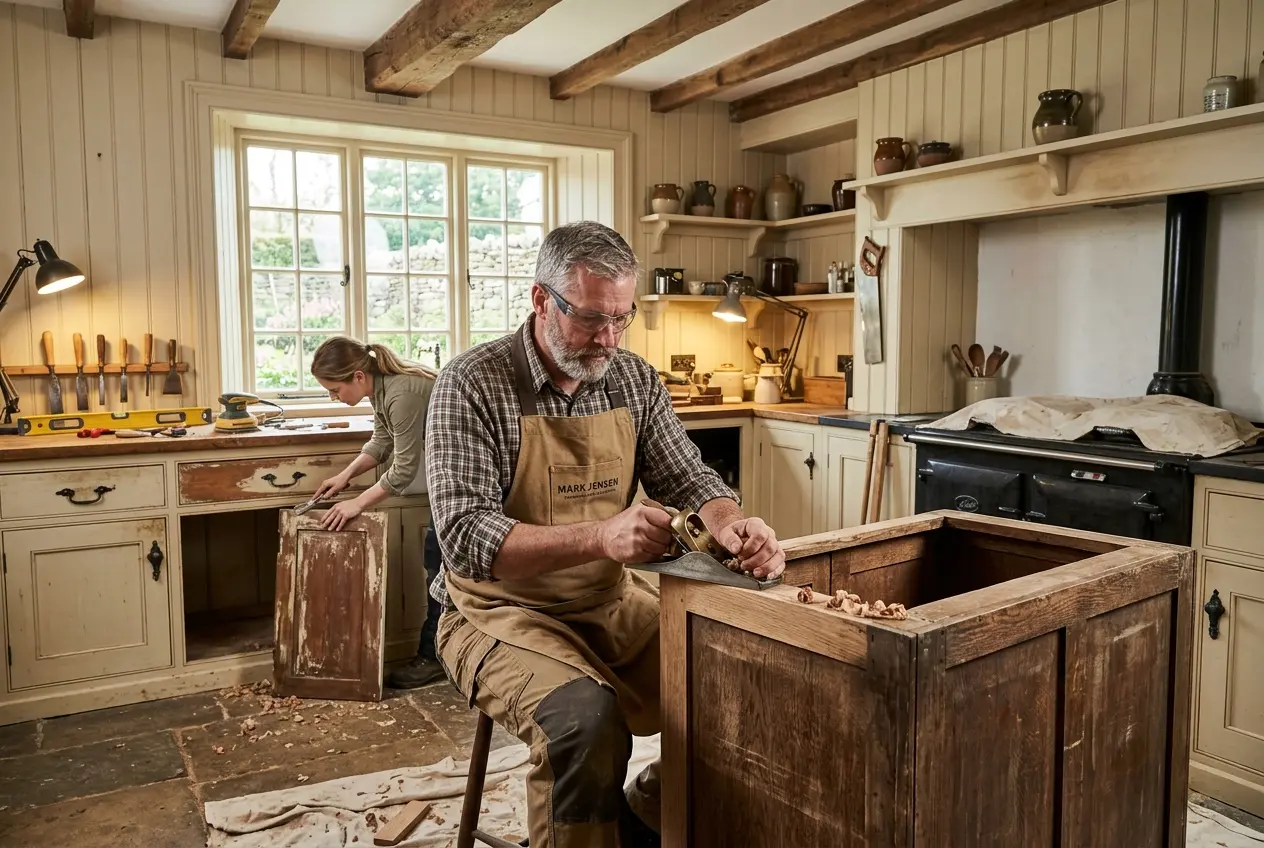
Many of Chicago's landmark districts require sensitive approaches to kitchen updates. Our restoration specialists document original layouts before carefully dismantling salvageable elements like built-in hutches or porcelain sinks. We then rebuild with historically appropriate materials—salvaged Chicago common brick for new walls, locally forged iron for hardware, and milk paint finishes.
Modern conveniences are discreetly integrated: refrigerator panels matching original cabinetry, undermount lighting disguised as period fixtures, and induction cooktops hidden beneath restored wood countertops. For Arts & Crafts homes, we recreate built-in breakfast nooks using quarter-sawn oak from the same Indiana mills that supplied early 20th-century builders.
Modern conveniences are discreetly integrated: refrigerator panels matching original cabinetry, undermount lighting disguised as period fixtures, and induction cooktops hidden beneath restored wood countertops. For Arts & Crafts homes, we recreate built-in breakfast nooks using quarter-sawn oak from the same Indiana mills that supplied early 20th-century builders.
Our Process
- 01 Step 1: Architectural research at Chicago Historical Society archives
- 02 Step 2: Salvage assessment of existing materials
- 03 Step 3: Milling of period-appropriate moldings and trim
- 04 Step 4: Installation with reversible modern systems
Benefits
- Maintains property value in historic districts
- Authentic materials from local suppliers
- Hidden modern appliances
- Preservation-approved techniques
Frequently Asked Questions
Can you restore my original Hoosier cabinet?
Yes, we partner with Chicago Antique Hardware to refurbish original mechanisms while adding discreet storage enhancements.
How do you handle modern electrical in vintage kitchens?
We conceal wiring within reproduced moldings and use replica push-button switches that meet current safety codes.